Kansas Forest Service
2026 Wildfire Awareness Week
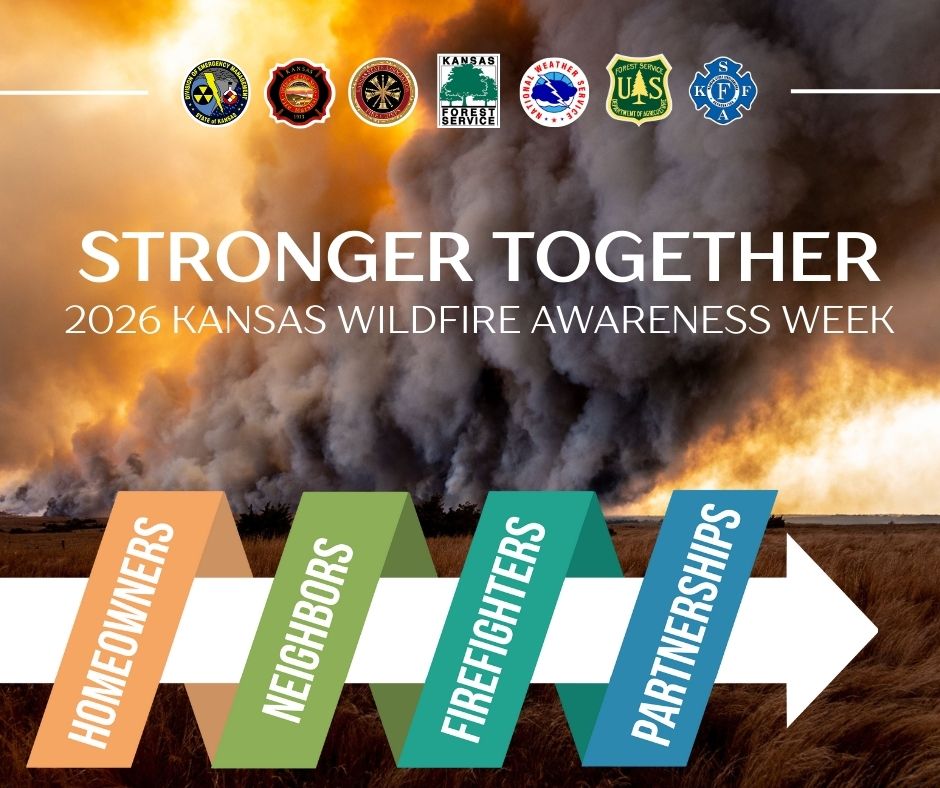
In February, we are recognizing Kansas Wildfire Awareness Week across the state. This public information campaign is a partnership between the Kansas Forest Service, the Kansas Division of Emergency Management, the Office of the State Fire Marshal, the Kansas State Firefighters Association, the Kansas Association of Fire Chiefs, and our Kansas partners through federal organizations; The National Weather Service, and the US Forest Service (through Cimmaron National Grassland).
Fire, weather, and emergency response agencies and organizations from across the state are encouraging Kansas residents to take part in Kansas Wildfire Awareness Week, February 8–14, to learn how working together can reduce wildfire risk across the state.
The 2026 theme, “Working Together for Wildfire Awareness – Making Kansas Stronger,” highlights how wildfire preparedness and prevention start at home and extend to neighbors, local fire departments, and state and federal partners.
More than 90 percent of wildfires in Kansas are human-caused, often resulting from escaped debris burns, dragging trailer chains, welding, equipment use, or other outdoor fires during high fire danger conditions. Wildfire Awareness Week focuses on simple actions Kansans can take to prepare, prevent, and respond to wildfires.
Homeowners are encouraged to reduce hazards around their homes by clearing dry vegetation and removing flammable materials. Neighbors and landowners can work together to reduce fuels and plan safe mitigation projects. Local fire departments, many staffed by volunteers, rely on public awareness and responsible behavior to keep communities safe.
Kansas Wildfire Awareness Week will also emphasize the importance of partnerships built before an emergency. Local, state, and federal agencies work together year-round to provide weather monitoring, training, equipment, and wildfire response support.
View the Kansas Governor's Proclamation for Wildfire Awareness Week.
Day 1 – Homeowners: Preparedness Starts at Home
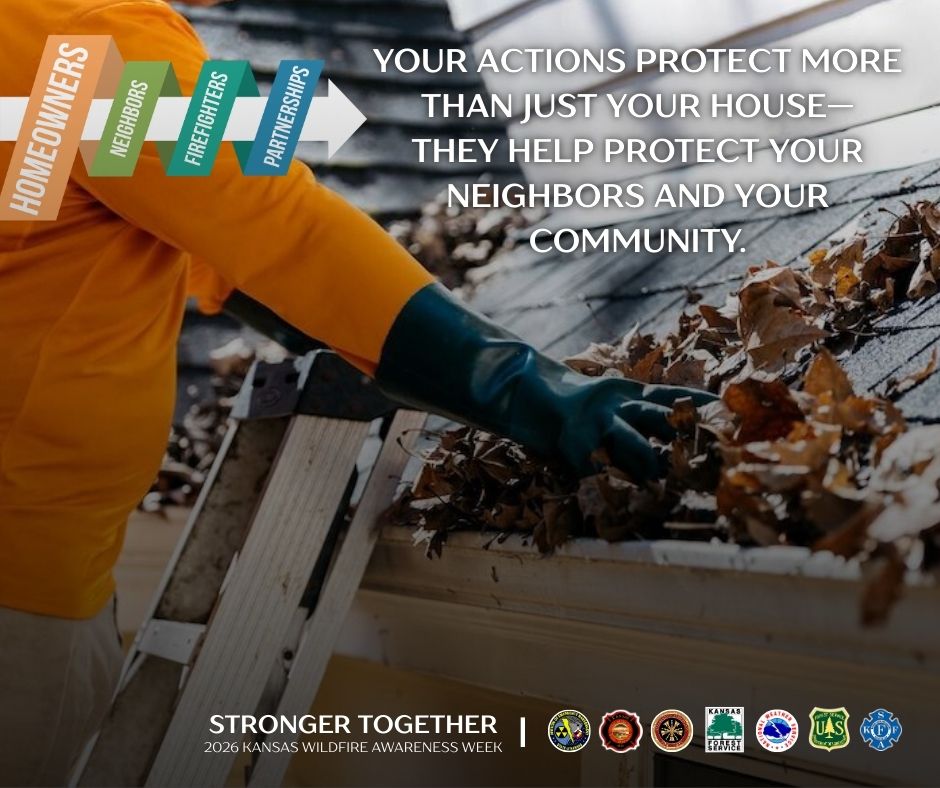
Your actions protect more than just your house—they help protect your neighbors and your community.
Prepare
- Wildfire preparedness begins at home.
- Focus on your Home Ignition Zone (HIZ): the area in and around your home where small changes can make a big difference.
- Easy weekend projects:
- Remove dry leaves, grass, and debris from roofs, gutters, and around foundations
- Move firewood and combustible materials away from structures
- Trim vegetation away from buildings and propane tanks
Take responsibility for your home—your preparation helps protect your neighbors, firefighters, and your entire community.
Prevent
- Reduce the chance of a fire starting by maintaining defensible space and eliminating ignition hazards near structures.
- Secure chains, clear debris from vehicles and equipment, and avoid risky activities on high fire danger days.
Respond
- Have a plan before a fire happens:
- Know multiple evacuation routes
- Sign up for local emergency alerts
- Prepare a “go kit” for your family and pets
- Your readiness helps first responders focus on the fire, not last-minute rescues.
Day 2 – Neighbors Helping Neighbors
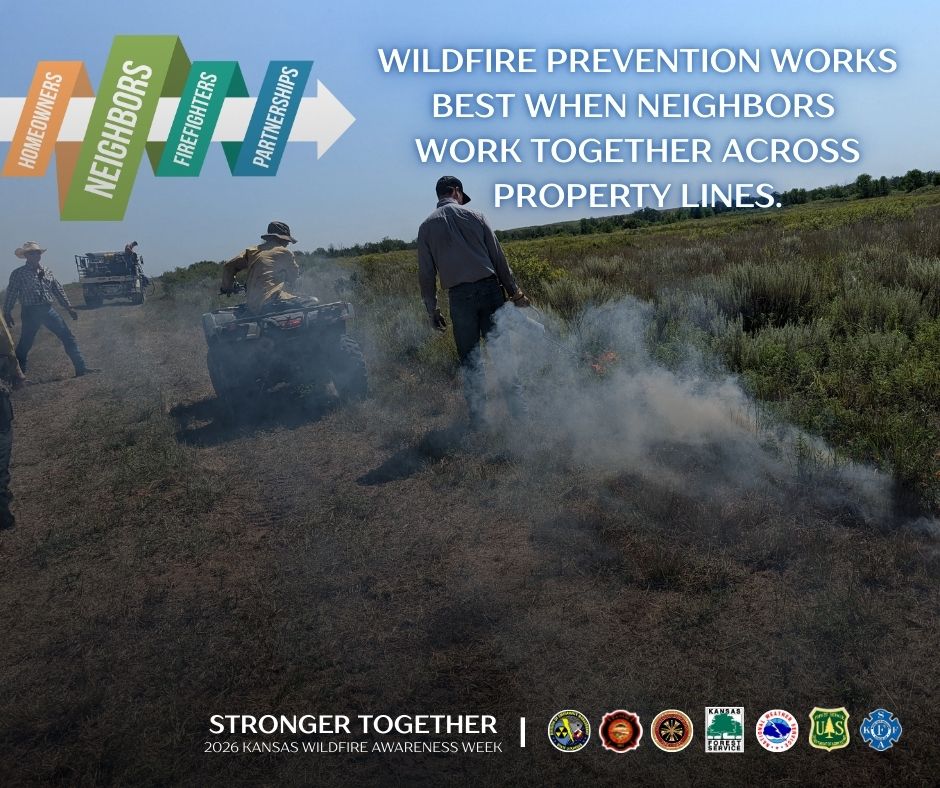
Wildfire prevention works best when neighbors work together across property lines.
Prepare
- Talk with neighbors about shared risks:
- Overgrown fence lines
- Abandoned structures
- Areas with heavy fuel buildup
- Make a neighborhood plan for access, evacuation, and mutual assistance.
Prevent
- Fuel reduction is a community effort.
- Work with neighbors to:
- Reduce hazardous vegetation
- Create shared fuel breaks
- Maintain roads and access points
- Interested in prescribed burning?
- Contact your local Prescribed Burn Association (PBA), neighbors, or a wildfire fuels specialist.
- Training, planning, and partnerships make prescribed fire safer and more effective.
Respond
- Check on neighbors during red flag conditions and after fire events.
- Know who may need extra help—older adults, livestock owners, or those with limited mobility.
- Strong communities recover faster when neighbors support each other.
Day 3 – Firefighters & Emergency Responders: Community Protection in Action
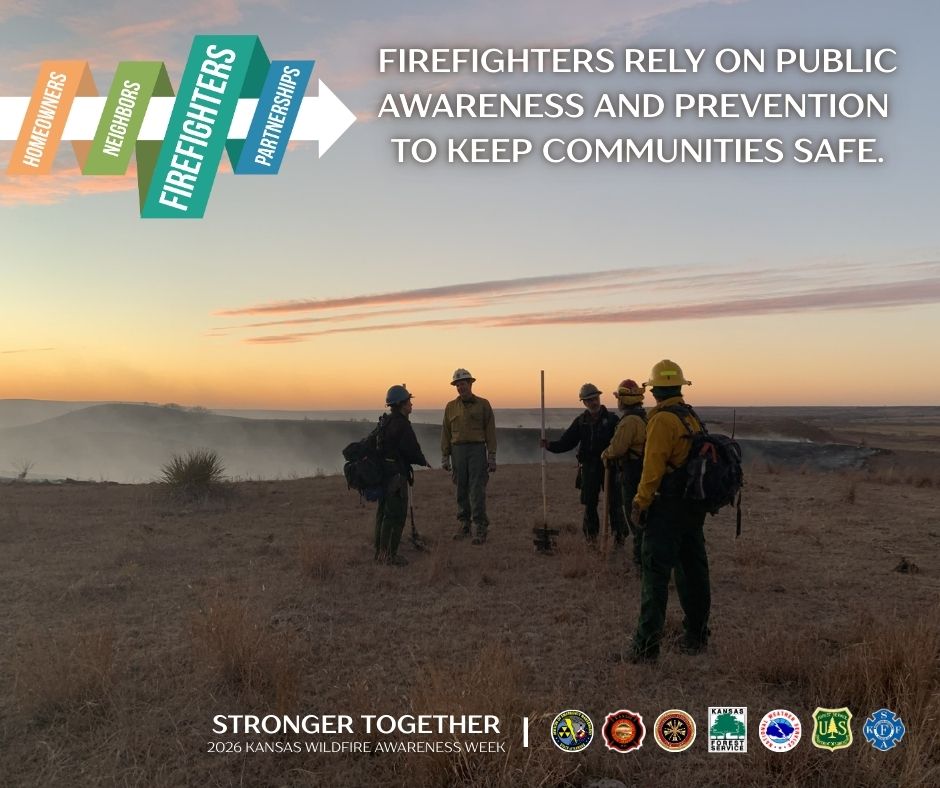
Firefighters rely on public awareness and prevention to keep communities safe.
Prepare
- Kansas is largely protected by volunteer fire departments—local responders who serve their own communities.
- Support your department by:
- Keeping driveways clear and properly marked
- Maintaining accessible water sources
- Learning local fire restrictions and emergency procedures
Prevent
- Over 90% of Kansas wildfires are human-caused.
- Help reduce preventable fires by avoiding common ignition sources, especially on high or extreme fire danger days:
- Dragging trailer chains
- Welding or grinding
- Escaped debris burns or burn piles
- Grilling, fire pits, and outdoor flames
- Follow all local regulations and burn restrictions—these protect firefighters as much as property.
Respond
- When a wildfire occurs:
- Follow evacuation orders immediately
- Give first responders room to operate
- Do not re-enter restricted areas
- Your cooperation allows firefighters to work safely and efficiently.
Day 4 – Partnerships: Working Before the Emergency
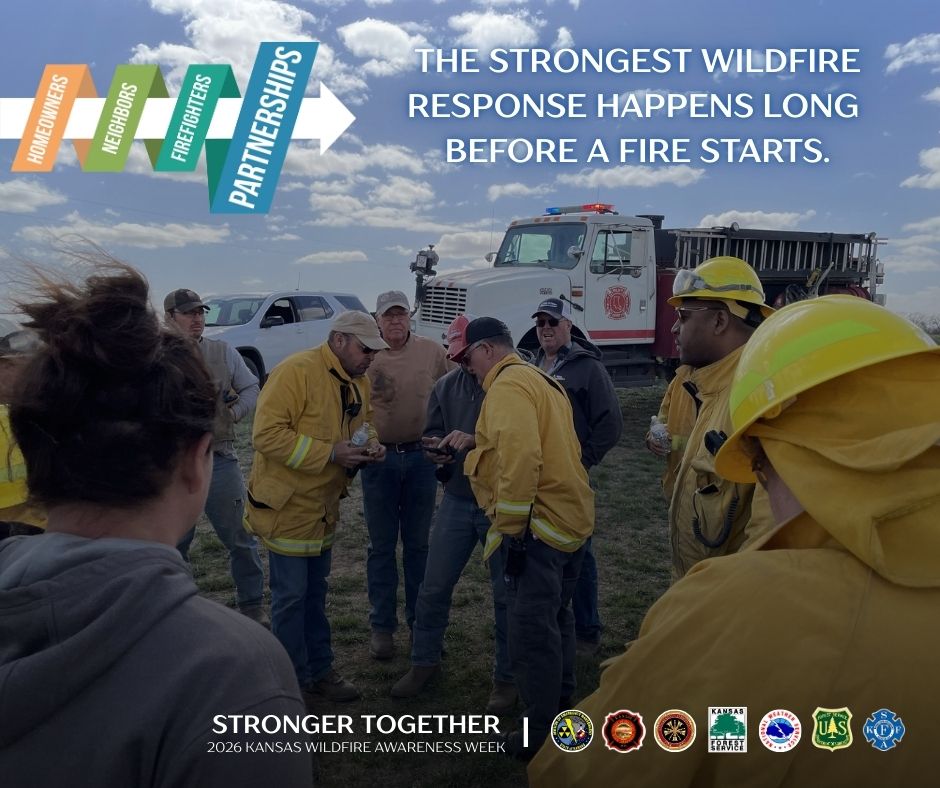
The strongest wildfire response happens long before a fire starts.
Prepare
- Know the resources available in your community:
- Kansas Forest Service – Wildland fire program, training, equipment, aviation support, incident management, prevention education, grants
- National Weather Service – Fire weather forecasts and Red Flag Warnings
- K-State Mesonet – Real-time weather data
- Kansas Division of Emergency Management, Office of the State Fire Marshal, Federal Emergency Management Agency, Kansas Department of Transportation – Emergency management, coordination, and recovery
- Get familiar with these agencies on a good day—before you need them on your worst day.
Prevent
- Coordinated planning, training, and education reduce wildfire risk statewide.
- Prevention programs, fuel mitigation projects, and public outreach work best when agencies, communities, and landowners partner together.
Respond
- When wildfire threatens, local, state, and federal agencies work as one team to:
- Provide aviation and ground resources
- Support incident management
- Assist communities during response and recovery
- Strong partnerships mean faster response, better communication, and safer outcomes.
Day 5 - “Making Kansas Stronger”
From your backyard to your neighborhood, from volunteer firefighters to state and federal partners—wildfire safety is a team effort.
When Kansans work together to prepare, prevent, and respond, we protect our homes, our communities, and each other.
That’s how we make Kansas stronger.