Kansas Forest Service News
Bush Honeysuckle
Bush honeysuckle species, including Amur, Tatarian, and Morrow’s honeysuckle, are pervasive invasive plants that can be found throughout the eastern half of Kansas. In fact, infestations of bush honeysuckle species have been confirmed in over half of Kansas’s 105 counties! Although these plants were once intentionally introduced for use in windbreaks and for ornamental purposes, they now pose a significant threat to our woodlands, riparian corridors, pastureland, and natural ecosystems. These allelopathic non-native invaders outcompete native vegetation, reducing plant diversity and overall ecosystem functionality.
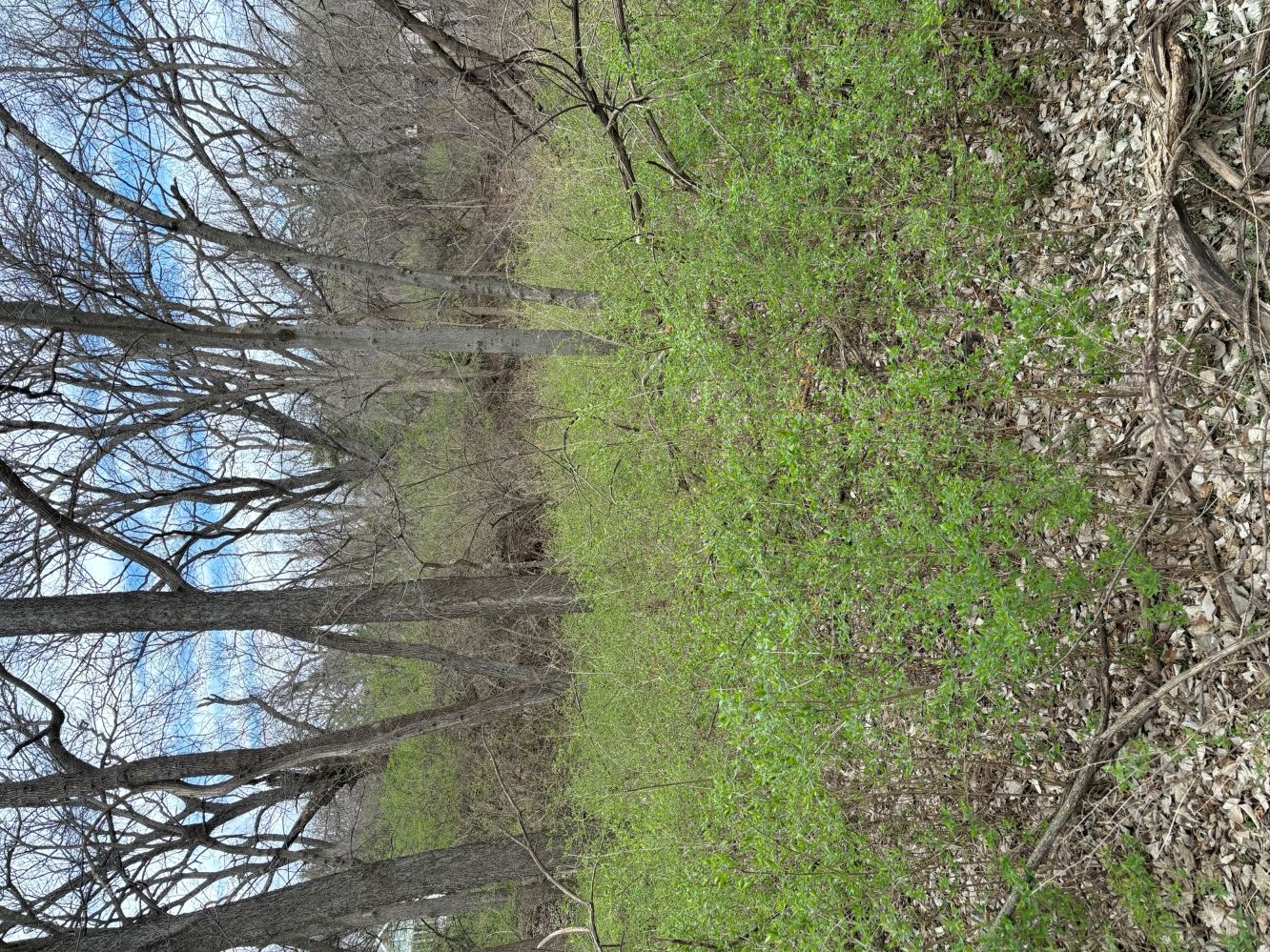 Bush honeysuckle in the late fall retains it's leaves after other trees and shrubs are dormant. This can be an ideal time to target the plants for control and removal efforts.
Bush honeysuckle is generally easiest to identify in early spring and late fall because it develops leaves earlier than many other plant species and retains them longer into the fall. These plants are multi-stemmed shrubs that typically grow up to 15 feet tall, with ascending and arching grayish-brown stems that become hollow as they mature. Their leaves grow in pairs on opposite sides of stems and are green, oval-shaped, and tapered to a pointed tip. Fragrant, tubular flowers range from white to yellowish in color are most prevalent in the spring, although they may appear at other times of the year. In the fall, the plant produces small, round, red berries approximately ¼ inch in diameter that grow in clusters along leafy stems. Each berry can contain anywhere between 2-6 seeds. Although these seeds are readily consumed by birds and other wildlife, they lack the nutritional value of fruits of native plants.
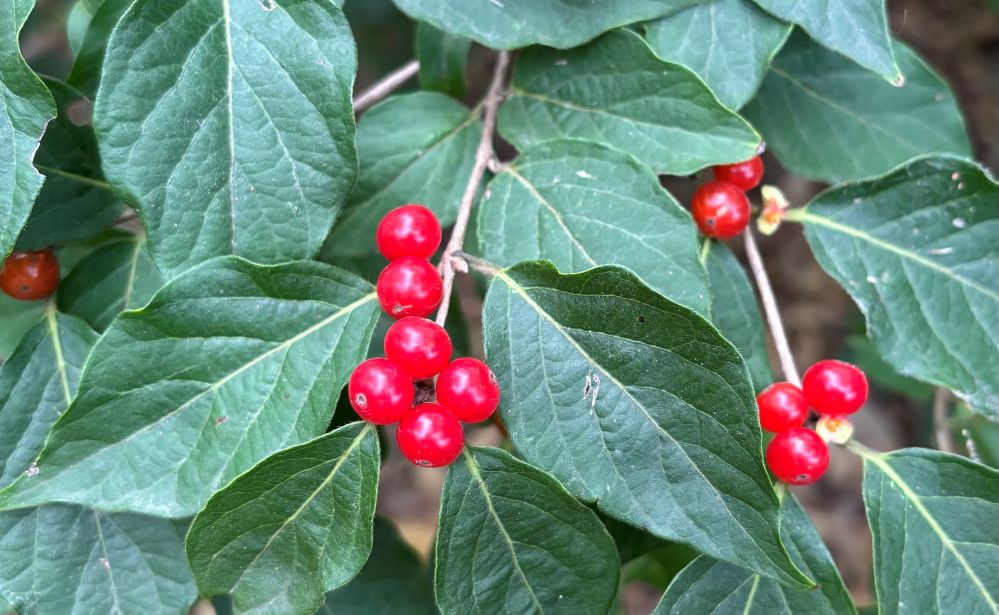 Bush honeysuckle fruit are bright red berries that grow close to the stem of the plant.
Along with the Kansas Forest Service, the Kansas Department of Agriculture has recognized this growing concern. As of May 2026, Amur honeysuckle has been designated a Category C noxious weed in Kansas. This classification recognizes that the species is already widespread and emphasizes the need for ongoing management to reduce its impact over time. Under the Kansas Noxious Weed Law, landowners are required to control the spread of this species on all lands they own or supervise.
With this designation, county weed offices are required to offer cost-sharing and reduced-price chemical materials to assist with management efforts. Local county weed offices should be able to provide more details on what discounts and other resources are available specific to your area.
Although managing the spread of bush honeysuckle can be challenging, a number of strategies can be employed to control existing populations and limit further expansion. As is often the case with invasive plant species, effective long-term management typically requires an integrated approach that combines multiple control methods. Applying Integrated Vegetation Management (IVM) principles allows land managers to select and combine strategies based on site conditions, infestation severity, available resources, and desired outcomes.
Cultural Control:
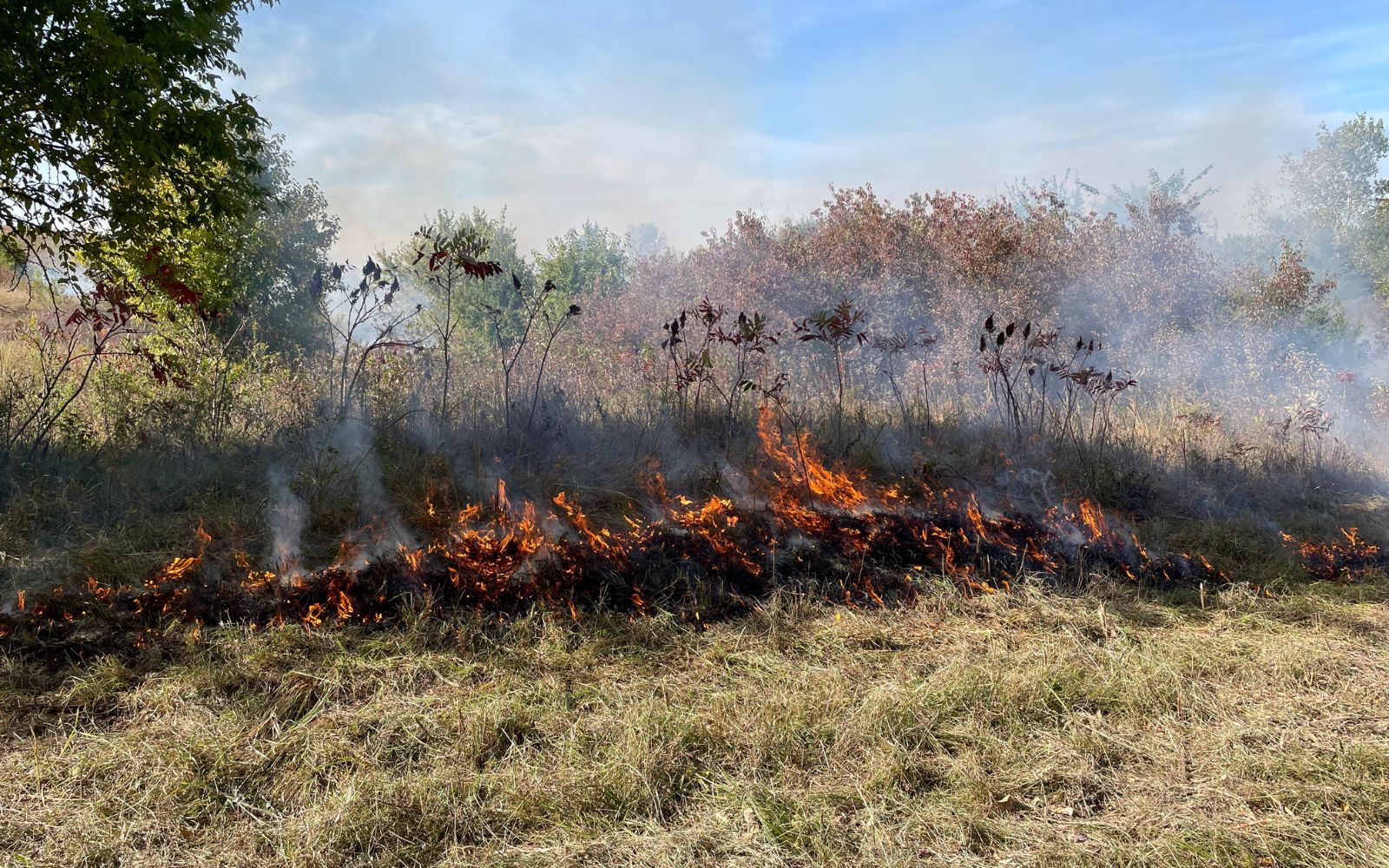
- Pescribed burning
- Promoting growth and regeneration of desirable overstory vegetation
Mechanical Control:
- Hand-pulling or mechanical removal
- Root docking
- Cutting or mowing plants at the base
- Heavy equipment removal including grubbing, mulching, and mastication
Chemical Control:
- Cut-stump herbicide applications
- Foliar herbicide applications
- Basal bark herbicide applications
- Mist-blower herbicide applications
Cultural Control:
- Targeted grazing
It is important to note that no single treatment method is likely to provide lasting control of an established bush honeysuckle infestation. Because plants can resprout following treatment and seeds can continue to germinate from the existing seed bank, ongoing monitoring and follow-up treatments are necessary to achieve effective and sustained control. These efforts should be considered essential components of an integrated management strategy and are essential to achieving sustainable and long-term results.
Shad Hufnagel
Forest Health Coordinator
Kansas Forest Service